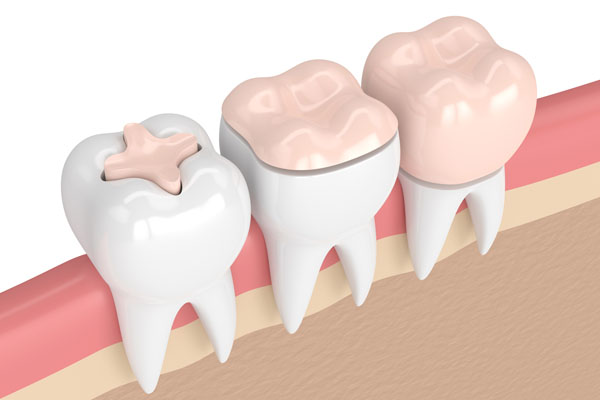
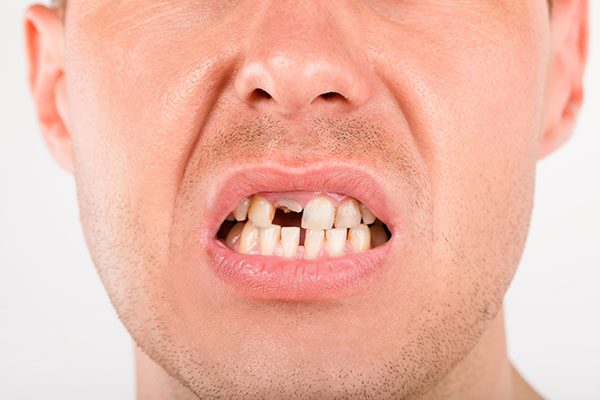
 Dental restorations are used to repair or strengthen damaged teeth and to replace missing teeth. The damage may be the result of routine decay, extensive decay, fractures, weak gums, and many other dental issues. Dentists recommend restorations based on the tooth, its location, the source of trouble, the health of surrounding teeth, tooth color, patient health and habits, possible allergic reactions, and treatment history. Other factors considered include:
- Patient finances
- Insurance coverage
- Time constraints
At times, these factors affect the dental patient in opposing ways, and the dentist must weigh the pros and cons of each type of treatment.
Restorative dentistry options
Dental caries, or tooth decay, is a common disease and is generally the result of bacteria left behind by specific types of food. The acid produced by the bacteria leads to serious damage to the hard surface of the tooth. This decay does not happen uniformly; instead, it attacks teeth where they are most vulnerable. These spots include deep fissures, areas nearest the gum line, and tight spots between the teeth. There are several common types of dental restorations.
Fillings
Fillings are the most common correction and are sometimes used to prevent decay. In teeth with caries, the decayed material is removed, and the empty space is filled with a silver amalgam, composite resin, or gold.
Crowns
Crowns are another common restoration. A tooth-shaped cap provides strength and support to teeth with a large amount of disease; these caps are often made of an alloy or porcelain. Crowns may prevent deteriorating teeth from cracking or getting pulled.
Root canals and extractions
Root canals are recommended when tooth decay has moved beyond the enamel and penetrated to the nerves in the root. During the procedure, the damaged nerve and the surrounding pulp are removed. A filling or crown may be used for further protection.
Extractions are completed when teeth are too damaged to repair. They are done in an effort to prevent infections from caries and other dental issues from spreading to other bones in the mouth. When teeth are missing, there is a chance that the remaining teeth will be misaligned. Bridges and dentures are often used to prevent this from happening.
Bridges and dentures
Bridges are used to fill in a gap made when one or more teeth are missing. They are usually fixed permanently in place with crowns on either side.
There are several variations of dentures. Partial dentures are used when some of the natural teeth remain. Complete dentures are used when there are not any natural teeth left. Immediate dentures are removable and inserted in the same visit that the last teeth are removed. Conventional dentures require cannot be inserted for several months after the final teeth are removed. Overdentures fit over existing teeth and implants.
Conclusion
Dentists watch for tooth decay at every routine checkup. They ask about tooth sensitivity or pain, probe for soft areas with dental instruments, and conduct thorough examinations. It is important that dental restorations are completed quickly to prevent further damage. Dentists work closely with patients to fully understand each of these factors before making a recommendation.
Request an appointment or call Chesterfield Dentist at 804-412-0867 for an appointment in our Chester office.
Recent Posts
Dental restorations help individuals regain oral functions like chewing and achieve better smiles. Although dentists' skills and experience are necessary to achieve favorable results, material choices contribute significantly to patient satisfaction.Dentists consider the location of teeth in the mouth and patients' input when selecting materials for dental restorations.Dentists aim to restore the function and appearance…
Dental restorations address decayed, weak, missing, and fractured teeth. Dentists use restorations to restore and replace entire teeth or parts of the tooth's structure. Cavities, or tooth decay, are among the top reasons for dental restoration. Cavities permanently damage the hard surface of the teeth. Decay may be caused by bacteria, sipping sugary drinks, frequent…
Dental restorations offer ways to remove damaged tooth enamel, halt further decay, and restore the function of damaged or lost teeth. However, some mistaken beliefs prevent people from getting necessary care for oral health. Understand how to separate fact from fiction to make better choices for your dental care.Learn the truth behind the following four…