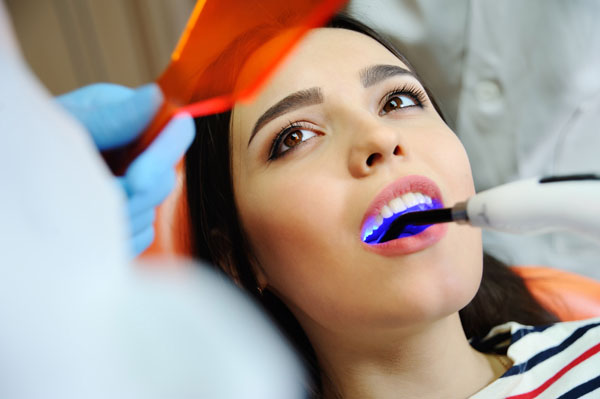
 There may be dental restorations available to treat a tooth that is damaged. The prognosis for restoring a damaged tooth is best when treatment takes place as soon as possible after the tooth breaks or cracks. This can occur from biting down on something that is too hard but can also happen if you get hit in the mouth. The longer you wait after breaking a tooth, the less likely it is that a dentist can restore it.
Does a broken tooth hurt?
Whether a broken tooth hurts depends on how deep the damage goes. The nerves in a tooth are in the dentin and the pulp, which are protected by the layers of hard enamel on the outside. If the crack or fracture exposes the pulp and the dentin, it can cause pain.
However, the tooth enamel has no nerves, nor any blood vessels. It would not be able to perform the work of chewing if it did because the act of biting down would cause pain. If a fracture or crack extends no deeper than the enamel, you typically experience very little, if any, pain from it. However, this does not mean that a broken tooth that does not hurt can be ignored.
What can happen if a broken tooth goes untreated?
Without appropriate dental restorations in a timely manner, a broken tooth can lead to other dental health problems.
Bacterial infection
Even a crack in the tooth's surface may be enough to allow bacteria to reach the dentin and the pulp of the tooth. The bacteria may proliferate and cause an infection. This can spread to the gums and, if it gets into the bloodstream, even affect other areas of the body far away from the mouth.
Sensitivity
Exposure of the nerves inside the tooth's pulp, as well as bacterial infection, could cause the teeth to become sensitive. You may feel a twinge of pain with temperature changes inside your mouth or pressure on the damaged tooth.
Soft tissue lacerations
A broken tooth can leave behind a sharp edge. Soft tissues in your mouth, such as the cheeks or the tongue, may rub up against the edge. These tissues are very delicate and can get cut from contact with the hard, sharp edge of a broken tooth.
Further damage
A tooth that is cracked or broken becomes weak and unstable. Subjecting it to the normal pressures of eating and chewing may be more than it can take, and it could break further. Eventually, the tooth may be so severely damaged that it can no longer be fixed by dental restorations.
Damage to other teeth
Teeth are intended to stand up to a lifetime of chewing, so the enamel is very hard. If a piece of a tooth breaks off in your mouth while you are eating, you may not feel it or notice it if it only involves the enamel. While the broken piece is floating around in your mouth, you may accidentally bite down on it, potentially damaging another tooth.
Conclusion
It may be possible to use dental restorations to fix a broken tooth. However, the chances decrease with delays in the treatment.
Request an appointment or call Chesterfield Dentist at 804-412-0867 for an appointment in our Chester office.
Related Posts
A damaged smile can feel overwhelming. Fortunately, there are professional treatments for broken teeth that ensure you receive the most effective solutions to restore your oral function and appearance. Whether the issue is a minor chip from a fall or a severe fracture caused by underlying decay, modern dentistry offers several approaches to address varying…
There are many options available for dental restorations, and it is important to be informed about the procedures and treatment plans involved before committing to one. Typically, a patient will have a consultation with a dental professional prior to having any work done. This type of appointment is an ideal time to ask questions and…
Dental restorations help individuals regain oral functions like chewing and achieve better smiles. Although dentists' skills and experience are necessary to achieve favorable results, material choices contribute significantly to patient satisfaction.Dentists consider the location of teeth in the mouth and patients' input when selecting materials for dental restorations.Dentists aim to restore the function and appearance…