Daily Care for Clear Braces
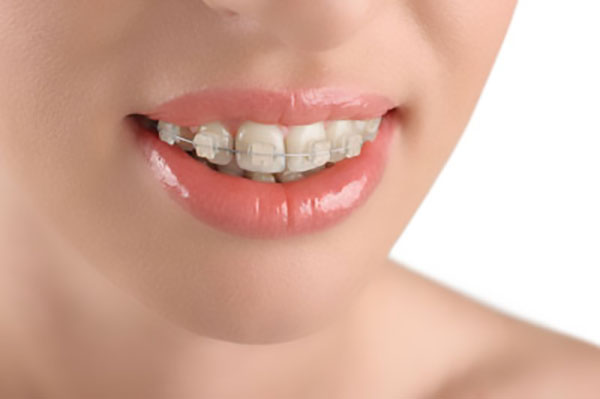
Clear braces provide a more discreet way to straighten teeth than metal braces. Clear braces are very similar to conventional metal braces, but instead of being made up of metal wires and brackets, tooth-colored brackets and transparent wires are used instead.
As a result, the patient gets a fixed appliance that is hardly visible in their mouth. It allows them to get their teeth straightened without having to deal with the hassle that comes with having a mouth full of metal, such as being teased.
Clear braces can be used to treat a variety of orthodontic issues like crooked teeth, gaps between teeth, overbites, underbites and crossbites. Treatment times with clear braces are about the same as with metal braces: one to two years.
Taking care of clear braces
Below are some simple tips that help to maintain clear braces and keep the teeth healthy during treatment:
1. Brush three times daily
Like metal braces, clear braces are like a magnet for food particles. It is normal for bits of food to be stuck on them after meals. Brushing once or twice a day when wearing clear braces does not cut it. Dentists recommend brushing at least three times a day or after every meal. Dentists also recommend cleaning the mouth after drinking colored or sugar-rich beverages. Doing these things reduces the patient's risk of tooth decay.
2. Avoid tannin-rich foods
Some foods and beverages have powerful coloring agents called tannins that can stain teeth. The tannins accumulate at areas where the brackets and wires connect with teeth, leading to the formation of stain lines. Brushing after consuming such foods helps to get rid of these tannins before they lead to permanent stains.
3. Have a dentist clean the teeth twice a year
The brackets that come with clear braces should be cleaned at least twice each year by a dentist. It is best to go to the same dentist that installed the braces since they are familiar with its design and the patient's teeth.
4. Floss regularly
Flossing helps to remove food particles from places a toothbrush cannot reach. Flossing daily gets rids of food particles that can lead to decay, discoloration, and, eventually, gum disease. Flossing is just as important as brushing when it comes to keeping these things at bay during clear braces treatment.
5. Use mouthwash
Rinsing the mouth with mouthwash a couple of times a day gets rid of food particles that brushing and flossing missed. It can provide teeth with essential minerals like fluoride and it kills oral bacteria that lead to tooth decay and bad breath. Rinsing with mouthwash is especially important when wearing clear braces because the brackets and wires can block the teeth from getting 100% cleaned.
Straighten teeth with clear braces
Want to find out more about clear braces? Working with a general dentist to start treatment is the best place to start. Reach out today!
Request an appointment here: https://thechesterfielddentist.com or call Chesterfield Dentist at (804) 412-0867 for an appointment in our Chester office.
Check out what others are saying about our services on Yelp: Read our Yelp reviews.
Recent Posts
Dental restorations help individuals regain oral functions like chewing and achieve better smiles. Although dentists' skills and experience are necessary to achieve favorable results, material choices contribute significantly to patient satisfaction.Dentists consider the location of teeth in the mouth and patients' input when selecting materials for dental restorations.Dentists aim to restore the function and appearance…
Extensive tooth loss can impact your oral health and quality of life. Fortunately, all-on-4 dental implants offer a reliable foundation for a renewed smile that supports your oral health and overall well-being. This innovative technique provides a stable, long-lasting solution for those who have lost most or all of their teeth and are looking for…
Dental restorations address decayed, weak, missing, and fractured teeth. Dentists use restorations to restore and replace entire teeth or parts of the tooth's structure. Cavities, or tooth decay, are among the top reasons for dental restoration. Cavities permanently damage the hard surface of the teeth. Decay may be caused by bacteria, sipping sugary drinks, frequent…
Dental restorations offer ways to remove damaged tooth enamel, halt further decay, and restore the function of damaged or lost teeth. However, some mistaken beliefs prevent people from getting necessary care for oral health. Understand how to separate fact from fiction to make better choices for your dental care.Learn the truth behind the following four…