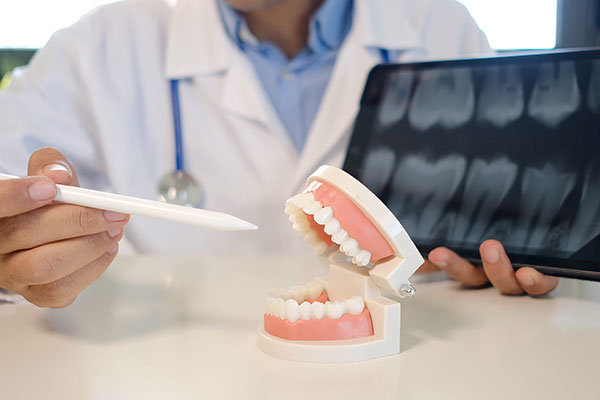
 For patients who have damaged or decaying teeth, dental restorations may be a necessity. Dentists use a variety of restorative procedures to protect and repair the structural integrity of an individual's teeth. Some of the most common restoration procedures may include dentures, crowns, and fillings.
When do patients require dental restorations?
No individual should suffer from severe tooth pain or discomfort. Decaying teeth, gum disease, and broken or damaged teeth can cause discomfort and interfere with a patient's ability to live a normal life. Damage to the teeth can also lead to gum disease and the development of serious oral infections.
Severe decay
Left untreated, cavities can destroy the tooth and damage the central nerves. Infections and abscesses may form at the root tip. Once a patient has an abscess, the only way to save the tooth is through a root canal or tooth extraction. During a root canal procedure, the dentist cleans the canals and removes the infected pulp. Once removed, crowns or fillings can repair the structure of the tooth. Dental restorations may also include tooth extraction and replacement with either a permanent or removable bridge or implant.
Cracked and broken teeth
Individuals can suffer cracks, chips, and broken teeth due to a variety of factors. While cracks sometimes occur due to chewing hard foods, falls and other injuries often lead to tooth damage as well. Even minor chips and cracks can become worse over time. A crack exposes the tooth to infection and decay. Any opening for bacteria to enter the tooth's bloodstream and attack nerves can lead to serious infection.
Dentists may use fillings or crowns to repair a tooth. The type of dental restoration used depends on the severity of the crack in the teeth. Crowns fully cover the teeth to prevent bacteria from entering the damaged areas. In contrast, fillings simply fill the area with composite, metal, or another material to prevent further damage and seal the tooth from bacteria.
Gum disease
For patients with gum disease, there are various restorations that may be available. One technique includes removing the bacteria in periodontal pockets and smoothing the areas of bone to allow the gum tissue to reattach. In severe instances, patients may require bone grafts or tissue regeneration.
Gum disease can lead to tooth decay and tooth loss. For patients who suffer from tooth loss, bridges and dentures become an important option. Dentures are generally acrylic resin and may be combined with metal attachments. Partial dentures use metal clasps that hook to remaining teeth, whereas complete dentures replace all teeth.
Patients may qualify for implants regardless of whether they have periodontal disease. When an individual has no active infection, dentists can perform an implant procedure.
Conclusion
For patients who suffer from decaying, fractured, or weakened teeth, dental restorations may be necessary. Common restorations for patients include fillings, implants, bridges, dentures, and crowns. Patients may have a choice in the type of restoration, but the restoration becomes necessary when an extraction is the only other option to restore a patient's oral health.
Request an appointment or call Chesterfield Dentist at 804-412-0867 for an appointment in our Chester office.
Recent Posts
There are many options available for dental restorations, and it is important to be informed about the procedures and treatment plans involved before committing to one. Typically, a patient will have a consultation with a dental professional prior to having any work done. This type of appointment is an ideal time to ask questions and…
Dental restorations help individuals regain oral functions like chewing and achieve better smiles. Although dentists' skills and experience are necessary to achieve favorable results, material choices contribute significantly to patient satisfaction.Dentists consider the location of teeth in the mouth and patients' input when selecting materials for dental restorations.Dentists aim to restore the function and appearance…
Dental restorations address decayed, weak, missing, and fractured teeth. Dentists use restorations to restore and replace entire teeth or parts of the tooth's structure. Cavities, or tooth decay, are among the top reasons for dental restoration. Cavities permanently damage the hard surface of the teeth. Decay may be caused by bacteria, sipping sugary drinks, frequent…